
Because UTA has such an expansive inventory of bus stops (more than 5,400), these stops are most often the public's first impression of UTA and our presence in the community.
UTA's objective is to make bus stops locations a positive contribution to the community. It is important that bus stops, to the maximum extent possible, are easily identifiable, clean, safe, accessible, and a comfortable place to wait for the bus.
Quarterly Dashboard
ADA Accessible Bus Stop Dashboard:

For a complete map of bus stop ADA compliance, click here.
In addition to the bus stop improvements in the Avenues, UTA plans to enhance several dozen more bus stops throughout the service area by the end of 2024, including on 200 South in Salt Lake City, which features a dedicated bus lane from 400 West to 900 East. For more details on the upcoming construction, visit rideuta.com/construction.
Bus Stop Master Plan
UTA has adopted a Bus Stop Master Plan (BSMP) that provides an inventory of existing conditions, as well as a common set of goals, design principles and guidelines, and policies to promote consistency in the design and provision of bus stops and their associated amenities. The aim is to ensure that stops are suited to their location, operationally functional, and attractive to current and potential riders.
The BSMP outlines and encourages partnerships with local governments and property owners. UTA is continually working with communities to improve access to bus stops with things like sidewalks, street crossings, curb ramps, and bicycle lanes.
This document contains four major sections. They are (1) a brief introduction to the purpose and need as well as the goals for the master plan, (2) a description of the existing conditions, (3) the design criteria and guidelines, and (4) a prioritization methodology for managing the bus stop capital improvement program.
Read the full plan here.
UTA-Led Bus Stop Improvement Efforts
The purpose of these bus stop improvements is to make stops accessible to all riders, including people with limited mobility. Exact changes will vary by location but typically include replacement of sidewalk panels, the addition of new concrete pads with updated signage, shelters, benches, and trash cans — all to make the riding experience better. Through bus stop improvements, UTA is investing in better a transit experience systemwide.
UTA will improve and build over 100 bus stops across the Wasatch Front over the next several months, including in Weber, Davis, Salt Lake, and Utah counties. Work began in September 2024 and will continue through March 2025.
For more info, click here.
Salt Lake City Bus Stop Improvement Partnership Efforts
In partnership with UTA, Salt Lake City has been improving bus stops across the city. The primary purpose of the changes is to make bus stops accessible to all riders, including people with limited mobility. Changes vary by location but typically include replacement of sidewalk panels and new concrete pads with the addition of shelters, benches, trash cans, bike racks, and lighting where warranted — all to make the riding experience better.
Recent bus stop efforts (2020-2025) have focused on making improvements on the following corridors and areas in Salt Lake City:
- South Temple: 200 East to Virginia Street
- 500 East: 300 South to 2500 South
- 2100 South: West Temple to 2100 East
- 2100 East: 2100 South to Foothill Boulevard
- Foothill Boulevard: I-215 to Wakara Way
- 1000 North: Redwood Road to 900 West
- 600 North: Redwood Road to 900 West
- 900 West: 1000 North to North Temple
- Downtown: Various locations
- 200 South Phase I: 900 East to 200 East
- Redwood Road: North Temple to 600 North
- 200 South Phase II: 200 East to 400 West
- 1100 East: 2700 South to 900 South
Current bus stop improvement efforts (2025) by Salt Lake City in partnership with UTA are focusing on making improvements on the following corridors to improve access for all riders and add amenities where warranted:
- 900 East: 3000 South to South Temple (34)
- State Street: 1700 South to 900 South (11)
- Redwood Road: 2100 South to North Temple (55)
- 100 South / University Street: (2)
These bus stop improvements align with Salt Lake City’s Transit Master Plan and support bus service.
To learn more about Salt Lake City bus stop construction, call 801-535-6630 or email transportation@slcgov.com.
To learn more about UTA bus service or changes, call 801-743-3882 or email rideuta@rideuta.com.
Adopt-a-Stop
UTA’s Adopt-a-Stop program encourages community stewardship and partnerships for the bus stops on our system. Similar to an Adopt-a-Highway program, UTA’s Adopt-a-Stop Program invites community organizations and businesses to take care of a nearby bus stop by performing basic maintenance like trash pickup, snow removal, and salting.
Partners are also invited to create or choose artwork that reflects the community and install a shelter wrap, creating an enhanced ridership experience and creative placemaking in the neighborhood.
Find out more at rideuta.com/AdoptAStop.
For questions and inquiries about the Adopt-a-Stop Program, contact community@rideuta.com.
Featured Bus Stop
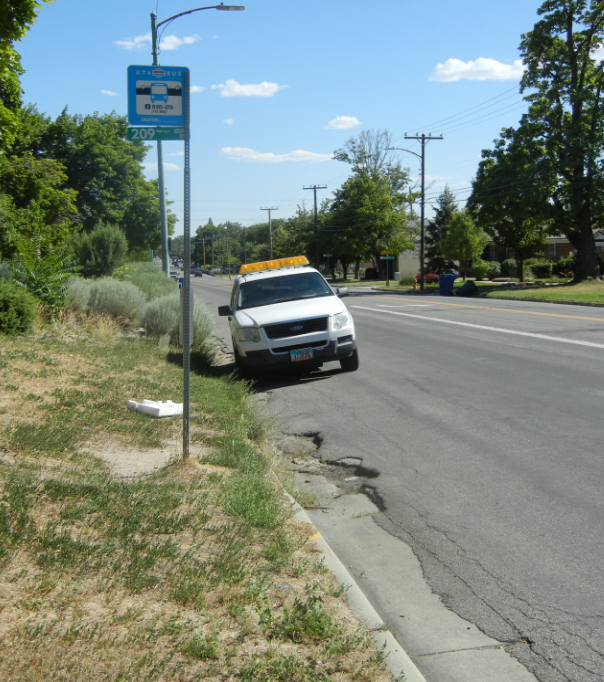

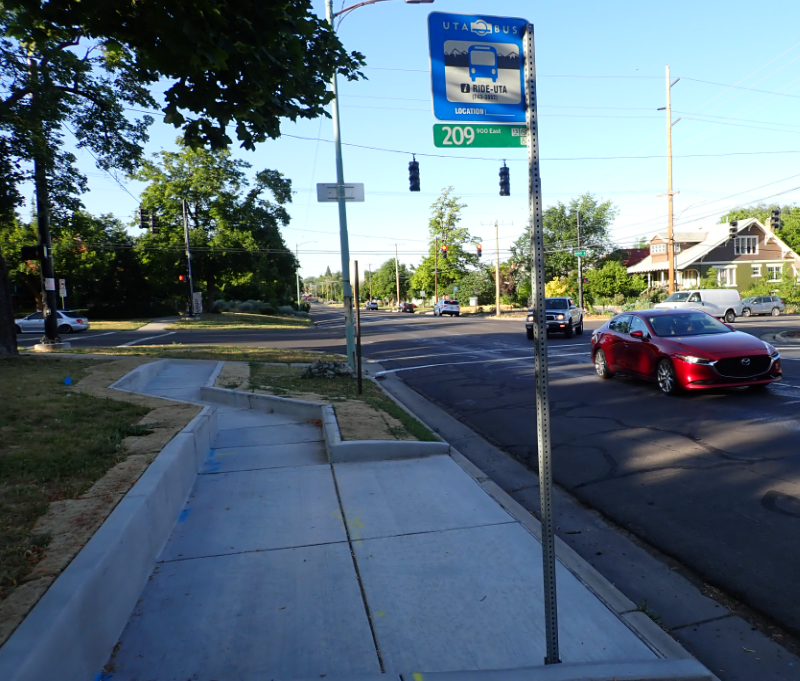
This route 209 bus stop, located at 900 E / 600 S, Northbound, sees double digit boardings a day and was part of a recent Salt Lake City-led bus stop corridor improvement project. As part of this project Salt Lake City and UTA examined bus stop locations for ideal placement, considering many factors such as safety, spacing, and operational feasibility. This particular bus stop was moved farside of the intersection which generally helps with speed and reliability. The bus stop now meets federal ADA requirements and allows for safer drop-offs for all passengers. Thanks to the efforts from Salt Lake Planning, this improvement and several others along 900 E will benefit UTA riders for years to come.
Get in Touch:
You can always reach out to our Customer Service team with questions and concerns about our bus stops: rideuta@rideuta.com, 801-743-3882